RECOVER - Day 2
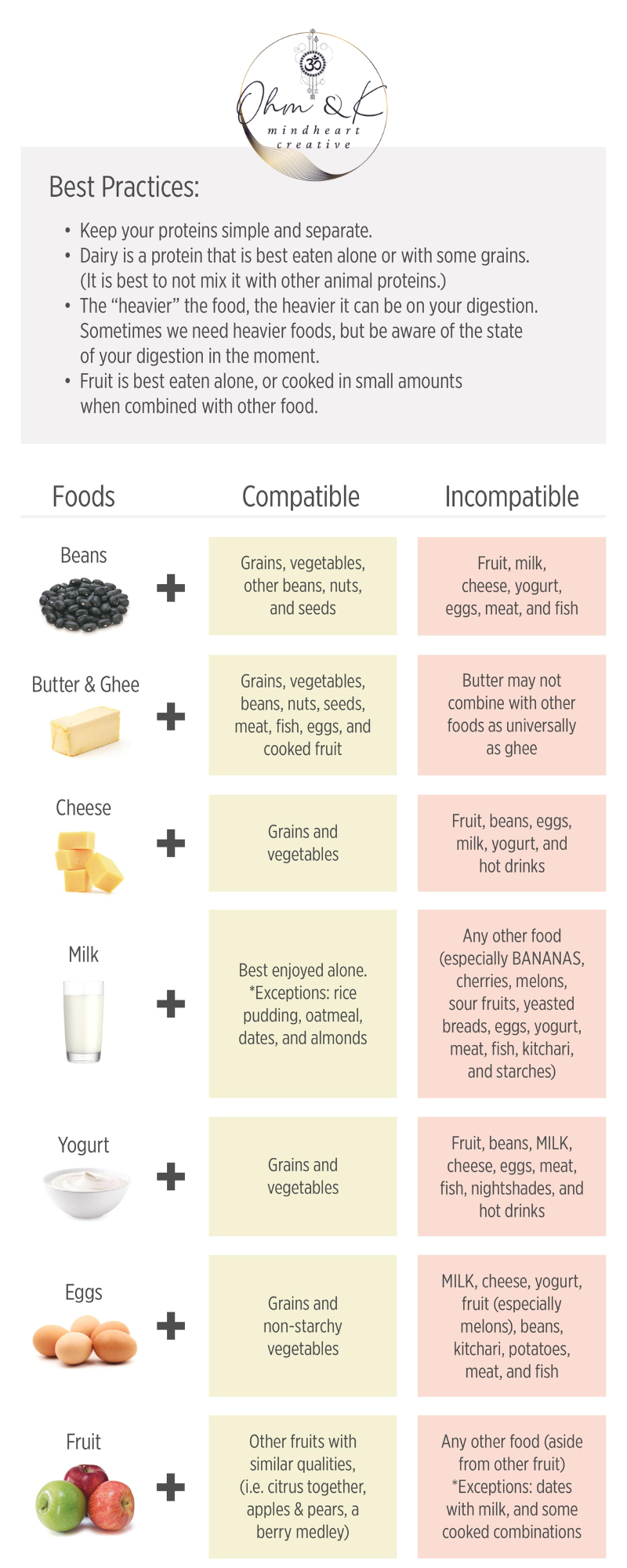
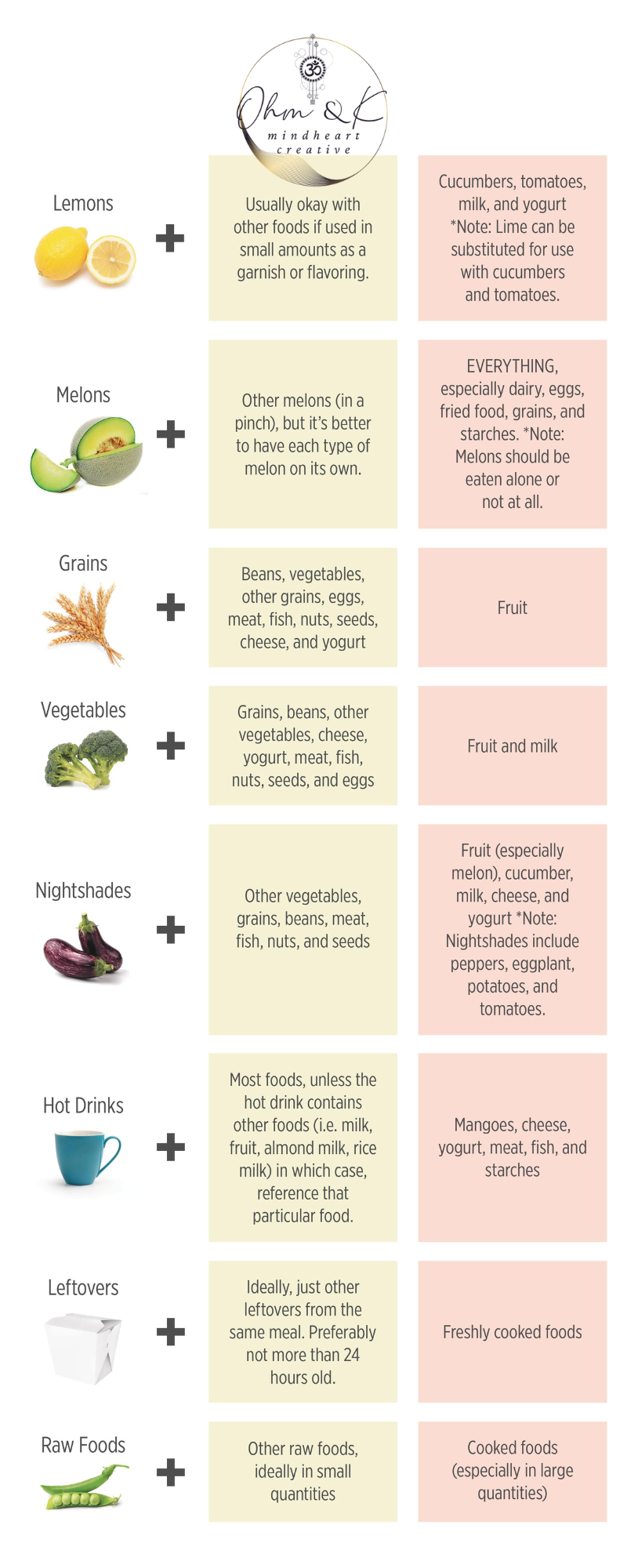
Incompatible Foods
According to Ayurveda, it is an essential part of understanding how to eat properly, just as discovering one's constitution and state of imbalance is important for one's Ayurvedic self-discovery. According to Ayurveda, every food has its own taste (rasa), a heating or cooling energy (virya), and a post-digestive effect (vipaka). Some also possess prabhava, an unexplained effect. So why does it matter? The Ayurvedic perspective on nutrition is that each food has a distinct combination of tastes and energies—and a corresponding effect on both the digestive system and on the body as a whole.
Combining foods with radically different energetics can overwhelm the digestive fire (agni) and can cause indigestion, fermentation, gas, bloating, and the creation of toxins. So while it is true that an individual’s agni largely determines how well or poorly food is digested, food combinations are also of great importance. When two or more foods having different tastes, energy, and post-digestive effect are combined, agni can become overloaded, inhibiting the enzyme system and resulting in the production of toxins. Yet these same foods, if eaten separately, might well stimulate Agni, be digested more quickly, and even help to burn ama.
Ama is a Sanskrit word that translates literally to mean things like “unripe,” or “undigested.” Essentially, it is a form of un-metabolized waste that cannot be utilized by the body. To some degree, the formation of small amounts of ama is a normal part of the digestive process, provided it is efficiently removed. But when it is not regularly cleared and eliminated, ama becomes hugely problematic. In fact, ama is said to be the root cause of all disease, and Amaya, a Sanskrit word for disease literally means “that which is born out of ama."
Careful food combining can dramatically improve the quality of digestion, support the body in receiving a deeper level of nourishment, and positively impact our overall health. However, most people in the modern world are accustomed to eating a number of foods that do not usually digest well together (like fruit with nuts, or beans with cheese).
Remember, food combining is not about imposing black and white rules. It is one of many powerful Ayurvedic tools for improving digestive health and overall wellness.
When you are feeling motivated and decide that you are ready to start adapting your diet to accommodate more supportive food combinations, consider tackling just one change at a time. Perhaps you’ll start by eating fruits alone, rather than in combination with other foods. Over time, you can gradually progress toward the ideal. While it would certainly be nice to avoid improper food combinations altogether, reducing their frequency can also be incredibly beneficial. If you do find that some specific food combinations are more problematic for you or your loved ones than others, focus your efforts on changing just those in the beginning.
The most important first step is to become aware of your needs and your habits; from there, you can evolve an approach to food combining that works for you.
Menu Day Two
Breakfast
Oatmeal with 1 tbsp pecans and ½ cup plain organic yogurt sweetened with 1 tsp. pure maple syrup or a pinch of stevia.
Note: Faster metabolism? add another ½ cup plain yogurt OR 1 hard-boiled egg OR 2 Tbsp. chopped walnuts mixed into the oatmeal.
Vegan Option: Substitute milk with almond, coconut or oat milk. Avoid yogurts that contain added sugars.
Note: Faster metabolism? have an additional 2 Tbsp. chopped walnuts.
Food Prep Tip: Manage a busy morning by preparing your oatmeal the night before. (Consider doubling the recipe, since you’ll have oatmeal again in Week 1.) Put it in a storage container to take with you and reheat. Add the toppings only when you’re ready to eat so they don’t get soggy.
Lunch
Greek Salad (with Chicken and Pine Nuts) and 1 serving Greek Dressing
Food Prep Tip If you have extra salmon, you can use that on your Greek salad instead of chicken.
Vegan Lunch Option: Greek Salad (without chicken)
3 Tbsp. pine nuts; 1 serving Greek Dressing and 1 Baked Sweet Potato
Dinner
Southwestern Veggie Taco
Note: Faster metabolism? have an additional 1/4 medium avocado.
Food Prep Tip Save time later by doubling the Black Beans and Rice (pg. 81) recipe now. You can freeze the extra until you are ready to use it. Then you can substitute it for another meal in Week 1, or use it in Week 2 to replace the Pinto Beans and Rice (pg.99).
SNACK IDEAS
Green apple + 15 raw almonds ½ cup
Cooked Quinoa + 1/ 3 medium avocado
1 to 2 cups raw veggies (carrots, broccoli, cauliflower, pea pods, bell peppers, etc.) + ¼ cup hummus OR ¾ cup organic plain yogurt
1 medium green apple + 1 tbsp. organic almond butter 1 hard-boiled egg + 6 to 10 whole-grain crackers (100 calories total for crackers)
1 cup raspberries + ¾ cup plain organic yogurt sprinkled with cinnamon
1 cup shelled organic edamame 3 celery stalks + 2 Tbsp. organic almond butter
Recipes
Oatmeal (Makes 1 serving)
1 cup water
1 pinch Himalayan salt
1/ 2 cup old-fashioned rolled oats
Bring water and salt to boil in medium saucepan over medium heat. Add oats; cook, stirring frequently, for 4 to 5 minutes. Remove from heat. Place oatmeal in small bowl.
Greek Salad with Chicken and Pine Nuts (Makes 1 serving)
1 head romaine lettuce, chopped
1 medium cucumber, peeled, cut lengthwise, sliced
1 medium tomato, cut in wedges
5 kalamata olives, pitted, sliced
1 tbsp. pine nuts, toasted
3 o z. grilled chicken breast, boneless, skinless, chopped
Combine lettuce, cucumber, tomato, olives, pine nuts, and chicken in large bowl; mix well.
Southwestern Veggie Taco (Makes 1 serving)
1/ 4 medium avocado, mashed
2 Tbsp. fresh pico de gallo (salsa)
11/ 4 cup Black Beans and Rice (see recipe below)
1/ 4 cup cooked corn kernels
1 (6-inch) corn tortilla
Combine mashed avocado and fresh salsa in small bowl; mix well. Set aside. Place black beans and rice and corn on one half of tortilla; fold. Serve with avocado and salsa mixture.
Pinto Beans and Rice (Makes 1 serving)
1/ 2 cup canned pinto beans, with liquid
1 tsp. extra-virgin olive oil
1 tsp. ground smoked paprika
1 dash ground cumin
1/ 4 tsp. ground coriander
1 t sp. Bragg Liquid Aminos
Himalayan salt to taste
1 cup cooked brown rice
Heat beans in medium saucepan over medium heat for 3 to 5 minutes, or until hot. Drain. Add oil, paprika, cumin, coriander, Bragg Liquid Aminos, and salt (if desired); mix well. Gently fold beans into warm cooked rice.